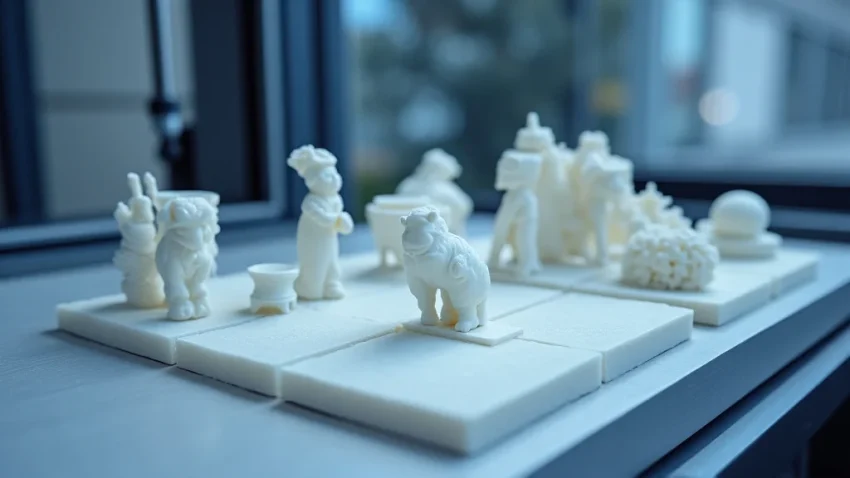
Remember that time you tried to build something from a kit, but the instructions were impossible to follow? Now, imagine creating your own objects from scratch! This post takes you on a fun exploration of 3d printer 3d modeling software. We’ll explore how you can use this technology to turn your ideas into physical objects, from custom toys to unique tools. You’ll learn how the software works, what to look for when choosing software, and how to get started creating your own designs. This will help you confidently choose and use 3d printer 3d modeling software, reducing any initial worries.
Key Takeaways
- Learn about different types of 3D modeling software and their features.
- Understand the basic principles of 3D design for printing.
- Discover free and paid software options suitable for beginners.
- Get tips on preparing your designs for successful printing.
- Explore various applications of 3D printing and modeling.
- Gain insight into software selection based on your specific needs.
Getting Started with 3D Printer 3D Modeling Software
The first steps to bringing your ideas to life with a 3d printer 3d modeling software involves understanding the basic concepts. The software helps you create digital models, which are essentially virtual representations of objects. These models are built using various tools, such as shapes, lines, and surfaces, that can be combined, modified, and scaled. After creating your design, the software prepares it for the 3D printer. This includes slicing the model into thin layers, so the printer can build it one layer at a time. The process often seems simple once you know the basics, leading to incredible results.
Software Types and Their Features
There are many software packages available. These packages vary widely in their approach, features, and target audience. Some are simple and easy to learn, perfect for beginners who want to quickly create basic objects. Others are complex, featuring advanced tools for professional-level designs. Some focus on creating organic forms, while others are better at precision engineering. Choosing the right software depends heavily on your specific needs and the type of projects you plan to undertake. Different types of software, each equipped with its own set of tools and advantages, caters to different skill levels and project requirements.
- CAD (Computer-Aided Design) Software: This type of software is commonly used for creating precise, technical designs, ideal for engineering, architecture, and product design. CAD software excels at creating dimensionally accurate models with a high level of detail. They often include features for simulations and analysis.
- 3D Sculpting Software: With this option, artists can create organic shapes using digital sculpting tools, much like sculpting with clay. This type excels at creating artistic models and complex shapes, such as characters or artistic figurines. These programs are ideal for creating highly detailed models that might be difficult to design using traditional CAD methods.
- Mesh Modeling Software: Mesh modeling software works by manipulating interconnected points that form the surface of an object, providing flexibility in creating complex structures. Mesh modeling is used in various fields.
CAD software packages, like Fusion 360, provide tools that allow you to define designs using exact measurements and constraints. This ensures that your printed objects will fit perfectly, especially important for projects like designing custom parts for machines or building components for a structure. The precise nature of CAD allows for efficient design changes and accurate adjustments. Using CAD software leads to a more reliable 3D printing experience, with parts that match the digital design closely.
Sculpting software, like ZBrushCoreMini, allows users to “push,” “pull,” and “smooth” virtual clay to create intricate details. The focus here is on the artistic creation of a shape rather than precise measurement. These tools support a wide variety of textures and finishes, bringing the digital creations to life. The freedom of sculpting software allows designers to explore their creativity with complex shapes.
Mesh modeling programs, such as Blender, use polygons and vertices to define the surface of a model. This approach is ideal for creating game assets, animations, and other objects where the form’s visual appearance is essential. These tools offer many features for design customization and are frequently used in creative projects.
Choosing the Right 3D Printer 3D Modeling Software
Choosing the correct 3d printer 3d modeling software is a critical step in turning your ideas into tangible objects. The decision affects the simplicity of the design, the complexity of the objects you can create, and even the learning curve. Before you pick a software package, consider your project’s technical needs, your design skills, and the amount of money you want to invest. Some software has steep learning curves, while others are easier to begin. Careful consideration of these points can prevent frustration and improve the outcome of your projects.
Assessing Your Needs and Skill Level
Begin by evaluating your needs. Will you be designing simple objects like toys or more complex parts for mechanical devices? Do you want to create organic forms or precise geometric shapes? These questions will greatly influence the software you choose. If you are starting, you may want to start with easy-to-learn software. Consider your current design skills. If you are new to 3D modeling, simpler software will be the best option. These programs provide introductory tools and tutorials to guide you through the initial steps. More experienced designers may benefit from software with more options and features. A basic understanding of design principles can significantly help you.
- Beginner Software: Software like Tinkercad offers an intuitive and easy-to-understand interface, perfect for beginners. These programs typically use simple shapes and drag-and-drop features.
- Intermediate Software: Software like SketchUp offers more features and flexibility. It is suitable for those with some experience who are ready to explore more advanced techniques. These programs have a broader selection of features and are often used in architectural and interior design.
- Advanced Software: Programs like Blender and Fusion 360 offer many tools for experienced designers, including advanced features such as simulations and custom scripting. These programs are often used in professional environments.
Tinkercad is a free, web-based tool ideal for introducing children and newcomers to 3D modeling. It uses a drag-and-drop system, which makes it simple to combine basic shapes like cubes, spheres, and cylinders to create more complex designs. The interface is clean, making it less overwhelming for new users. This allows you to quickly experiment and develop your ideas without getting bogged down by complicated tools or procedures.
SketchUp provides tools that balance ease of use with detailed modeling capabilities. SketchUp is suitable for those wanting to design detailed architectural models or products. With its intuitive interface and extensive toolset, SketchUp makes creating complex designs reasonably easy. The software allows you to build models with precise measurements and explore advanced functionalities, perfect for both personal projects and professional uses.
Blender is a powerful, free, open-source 3D creation suite, ideal for experienced designers or those looking for professional-level capabilities. It supports many advanced features, including detailed modeling, animation, and rendering capabilities. The interface can be challenging for new users, but its features make it ideal for creative projects and high-detail designs. Blender also offers an active community and extensive tutorials.
Cost and Accessibility
The cost of 3d printer 3d modeling software can vary widely, from free to thousands of dollars. Consider your budget and the types of projects you plan to create before making a choice. Free software options, such as Tinkercad and Blender, provide excellent tools for beginners and experienced designers. These tools may be perfect for many projects, especially for simple designs or those just starting. Subscriptions for more professional packages, like Fusion 360 and SketchUp Pro, may be appropriate if you want advanced features. When evaluating costs, keep in mind any subscription fees, licensing requirements, or extra costs.
- Free Software: Free options like Tinkercad and Blender are great for beginners. They offer basic functionalities without any cost.
- Subscription-Based Software: Software like Fusion 360 and SketchUp Pro uses a subscription model. These programs often provide more advanced features and support.
- One-Time Purchase Software: Although becoming less common, some programs are available for a one-time purchase. This can be cost-effective for those planning long-term use.
Tinkercad is entirely web-based and free, requiring no installation. The user-friendly interface makes it ideal for beginners and casual users. Blender, on the other hand, is a free, open-source option for those wanting more advanced tools. Blender supports many features that are usually available in paid programs.
Fusion 360 offers a large set of tools, allowing for complex and specific designs for 3D printing. SketchUp Pro offers professional-grade features for architects and designers. SketchUp allows for creating accurate models and the ability to export the files in several formats that can be used with a 3D printer.
Older software often uses a one-time purchase method. Although some of these programs may have limited features, they offer the chance to have software without continuous fees. This option can be appealing for those who want software without recurring expenses.
Preparing Your Designs for 3D Printing
After creating your design in 3d printer 3d modeling software, you must prepare it for printing. This process includes converting your design into a format the printer understands and ensuring your design is suitable for printing. The steps include exporting your model, checking for design problems, and using slicing software. The accuracy of these steps directly affects the final result. Any errors will lead to printing failures, wasted materials, and disappointment.
File Formats and Exporting
3D models created using 3D modeling software need to be converted to a format the printer understands. The most widely used file format for 3D printing is STL (Stereolithography). Other formats, such as OBJ (Wavefront Object) and 3MF (3D Manufacturing Format), are also used. Ensure your software can export to STL or other compatible formats. This stage is key for 3D printing as it ensures the model is prepared to be correctly interpreted by the slicing software.
- STL (Stereolithography): This file format is the standard for 3D printing. It represents the surface geometry of a 3D model using a series of triangles.
- OBJ (Wavefront Object): This format is used to store 3D models and includes color and texture information, along with the geometry data.
- 3MF (3D Manufacturing Format): This format is modern and stores models with full data, supporting color, textures, and other data for better printing results.
The STL format is universal. It ensures compatibility across many 3D printers and software programs. The STL file includes only the surface geometry, omitting information about color, texture, and other aspects. This makes it straightforward for slicing software to interpret the model as it builds the object layer by layer. The ease of use and broad compatibility make it the top choice for 3D printing.
The OBJ format can hold color data, making it useful for projects that require color texture. Though it is not as universally compatible as STL, it is useful in specific cases. It’s often used when you need to print a model with multi-color options.
3MF files are designed to be better than STL files, with added support for storing additional data. This allows for greater detail in the finished prints. This format has seen a growth in use, particularly in the professional and industrial spheres, where complex designs and detailed printing are necessary.
Model Inspection and Repair
Before you print, you must inspect your 3D model for errors, such as holes, non-manifold geometry, or intersecting surfaces. These errors can cause printing problems and lead to failed prints. Many programs can detect and repair these errors, ensuring the print will succeed. Repairing models involves closing holes, correcting overlapping surfaces, and simplifying complex geometry. This step ensures that the model is suitable for 3D printing.
- Watertightness: Make sure the model is “watertight,” meaning that all surfaces are sealed, forming a solid volume without holes or gaps.
- Non-Manifold Geometry: Repair any non-manifold geometry, which means surfaces that are not connected properly.
- Overlapping Surfaces: Remove any overlapping surfaces. These can cause printing errors.
A watertight model is critical for 3D printing. If the model is not watertight, the slicer may not be able to process it correctly. Checking the models for holes and gaps is a necessary step. Tools within most software packages and separate repair utilities help to close any gaps and ensure the model is suitable for 3D printing.
Non-manifold geometry includes surfaces that intersect or are connected in odd ways, which can cause confusion during the slicing process. Many programs have automatic repair tools that can fix these issues, making the model printable. Repairing non-manifold geometry is essential for a good print outcome.
Overlapping surfaces can cause the slicer to misinterpret the model, leading to defects or inaccuracies in the printed part. Overlapping surfaces can be detected and eliminated by the same software you use for detecting holes. This will make certain the model has a well-defined shape that can be printed without issues.
Common Myths Debunked
Myth 1: 3D printing is too complicated for beginners.
The reality is that while advanced 3D printing can be complex, many user-friendly software options, like Tinkercad, are specifically designed for beginners. These programs offer intuitive interfaces and tutorials, allowing users to create simple designs quickly. Learning the basics of 3d printer 3d modeling software and 3D printing can be easier than you think, especially with the abundant online resources and the user-friendly tools available. Starting with basic projects and gradually exploring advanced features makes the learning process enjoyable.
Myth 2: 3D printers are expensive and only for professionals.
While industrial-grade 3D printers can be costly, several affordable options are available. The cost of 3D printers has decreased significantly over the past few years, making them accessible to hobbyists and individuals. Some cost under $300. There are also many free, open-source 3d printer 3d modeling software programs available to create models. The combination of affordable printers and free software allows anyone to explore 3D printing.
Myth 3: All 3D printed objects are low-quality.
The quality of 3D printed objects depends heavily on the printer, materials, and the design itself. Advanced 3D printers can produce parts with amazing accuracy and detail, suitable for many applications. Also, the quality of a 3D printed object relies on the 3d printer 3d modeling software you used to create the model. Factors like layer height, printing speed, and material properties directly affect the final quality. Proper design and preparation are important factors, leading to high-quality results.
Myth 4: 3D printing only involves printing plastic objects.
While plastics are common, 3D printing supports a variety of materials, including metals, ceramics, and composites. These materials are used in many industries, from aerospace to healthcare. The range of materials is always growing. Recent developments have expanded the possibilities for different applications.
Myth 5: You need to be an engineer to create 3D models.
While engineering knowledge can be useful, it is not required to create 3D models. Numerous software programs are easy to use, even without formal engineering training. These tools provide features that make 3D modeling accessible to anyone. There are plenty of online resources and tutorials that can help you learn the skills you need. Creative expression and the willingness to learn are more essential than formal qualifications.
Frequently Asked Questions
Question: What is the best software for beginners?
Answer: Tinkercad is widely recommended for beginners. Its intuitive, drag-and-drop interface makes it easy to learn the basics of 3D modeling.
Question: Can I print without using 3d printer 3d modeling software?
Answer: Yes, you can download pre-made models from websites like Thingiverse. These are ready to print after being sliced. You will still need slicing software, though.
Question: What’s the difference between CAD and sculpting software?
Answer: CAD software is used to make precise, technical designs, while sculpting software is used for creating organic shapes with free-form tools. CAD programs provide precision, while sculpting programs allow for artistic creation.
Question: What file format is best for 3D printing?
Answer: STL is the most common format, as it is widely supported by 3D printers. OBJ and 3MF files are also used and have additional features.
Question: What if my 3D print does not come out correctly?
Answer: Check your design for errors, such as holes or overlapping surfaces. Make sure your printer is calibrated correctly. Double-check your slicing settings. Check and adjust these aspects to improve your printing results.
Final Thoughts
The world of 3d printer 3d modeling software offers boundless possibilities for bringing your ideas to life. From designing toys to crafting custom tools, the options are as expansive as your imagination. By gaining a deeper understanding of the different types of software and how to use them, you can select the right tools for your specific requirements. You can transform the way you think about creating objects. Armed with a printer and software, you can embark on an exciting path. Explore the features of various software programs, download the software, and start creating something today. With a little practice, you can transform your creative ideas into 3D objects.