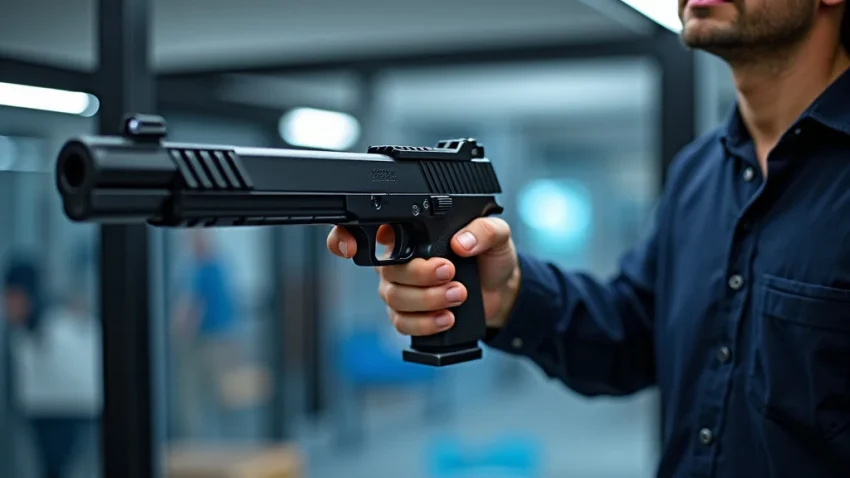
Imagine stumbling upon a news report about a 3d printer gun and feeling a mix of curiosity and concern. You might wonder how these objects are created, if they are safe, and what impact they have on society. This blog post aims to explore the process of creating a 3d printer gun, examine the legal and safety aspects, and discuss the wider implications. You’ll gain valuable knowledge about the technology, the challenges, and the potential future of this developing field. This information will help you form a balanced view and enable you to engage in informed conversations. We’ll explore the technology behind this innovative approach to firearms production.
Key Takeaways
- Learn about the 3D printing process and how it applies to manufacturing firearms.
- Examine the types of materials and design elements involved in the construction of a 3d printer gun.
- Discover the legal challenges and restrictions associated with 3D-printed firearms.
- Consider the safety risks and potential misuse concerns related to these weapons.
- Discuss the ongoing development and evolution of 3D-printed firearm technology.
- Understand the societal impact and ethical questions surrounding 3D printer guns.
The Basics of 3D Printing Firearms
The creation of a 3d printer gun begins with the 3D printing process, which is also known as additive manufacturing. This technique involves building a three-dimensional object layer by layer from a digital design. This is different from traditional manufacturing methods like machining or molding, which remove material or shape it from a mold. 3D printing offers a new level of design flexibility and the ability to produce customized parts and items.
This section explores the core concepts of 3D printing and how they relate to firearms production. The principles behind the technology and how they are applied in this context are important. Understanding these fundamental aspects is key to any further exploration of 3D-printed firearms.
Additive Manufacturing Explained
At the heart of 3D printing is additive manufacturing, a process that constructs objects by adding materials layer by layer. This contrasts with subtractive manufacturing, where material is removed to achieve the desired shape. Common 3D printing processes include Fused Deposition Modeling (FDM), Stereolithography (SLA), and Selective Laser Sintering (SLS).
- Fused Deposition Modeling (FDM): FDM printers use a heated nozzle to melt and deposit a thermoplastic filament, like ABS or PLA plastic, layer by layer, to build a 3D object. It’s affordable and user-friendly, suitable for creating prototypes and models. The accuracy and material properties vary depending on the filament.
- Stereolithography (SLA): SLA printers use a laser to cure liquid resin into solid layers, with each layer hardened to the design’s dimensions. SLA creates incredibly detailed and smooth surfaces. It’s ideal for high-precision models and parts, but the resins are often more costly and require special handling.
- Selective Laser Sintering (SLS): SLS uses a laser to fuse powdered materials, such as nylon or metal, together, layer by layer. This method produces strong and durable parts, ideal for functional prototypes and end-use products. SLS-printed parts often have a rougher surface finish.
FDM is a commonly used technique for creating basic 3D printer gun components, such as frames and grips. The ease of access and low cost of FDM printers make this technology attractive to individuals.
SLA is capable of creating more complex and precise parts than FDM, which opens up the ability to create more intricate gun designs.
SLS provides the ability to create parts from stronger and more durable materials, which allows the creation of functional firearms. SLS offers greater design freedom because support structures are less necessary.
Digital Design and 3D Modeling
The creation of any 3D-printed object begins with digital design. 3D modeling software allows designers to create detailed digital representations of objects. These digital models are then converted into a file format like STL, which is compatible with 3D printers.
- CAD Software: CAD (Computer-Aided Design) software is essential for 3D modeling. Programs like AutoCAD, Fusion 360, and Tinkercad allow designers to create precise models. CAD software enables the designer to visualize and modify designs before printing.
- STL Files: STL (STereoLithography) files are a standard file format used for 3D printing. STL files represent a 3D model as a collection of triangles, which is easily interpreted by 3D printers. The file contains information for each triangle’s vertices and normals.
- Slicing: Slicing software converts the STL file into instructions for the 3D printer. This includes information about layer thickness, print speed, and support structures, all of which are essential for successful printing.
CAD tools are used to design all components of a 3d printer gun, including frames, slides, and magazines.
Once a 3D model is created in CAD software, it is converted to an STL file for the 3D printer.
Slicing is a key step, where the printer’s movements and material deposition are prepared. This process ensures the 3D printer gun is built correctly.
Materials Used in 3D Printing Firearms
The choice of materials is important when constructing a 3d printer gun, and the right selection will affect the firearm’s performance, durability, and safety. Different materials offer unique benefits, and the suitability of a material depends on the design and intended use of the firearm. As 3D printing technology continues to advance, the range of available materials is expanding.
- Plastics: Plastics are a common choice for 3D-printed firearms due to their accessibility and ease of use. ABS (Acrylonitrile Butadiene Styrene) and PLA (Polylactic Acid) are popular choices. ABS is known for its durability and impact resistance, while PLA is biodegradable and easy to print.
- Polymers: High-performance polymers offer superior strength and thermal resistance. Nylon and polycarbonate are frequently used in the construction of 3D-printed firearms, because they are resistant to higher temperatures and stress.
- Metals: Metal 3D printing is advancing, enabling the creation of stronger, more durable firearms parts. Stainless steel and aluminum alloys are popular choices. Metal parts offer greater durability and reliability than plastic, especially in high-stress areas like the barrel and firing pin.
While plastic is a popular material choice for 3D printer guns, it may not be suitable for all parts or high-stress applications.
Nylon and polycarbonate are used to improve the durability and reliability of 3D-printed guns, especially for critical components such as frames and slides.
Metal 3D printing is a growing area that has the potential to allow for the production of more robust and reliable 3d printer gun parts.
Design and Construction of a 3D Printer Gun
The design and construction of a 3d printer gun involves different steps, from creating the digital models to printing and assembling the components. Each part of the firearm must be carefully planned and created to ensure functionality and safety. The design process will also include considerations regarding material properties and mechanical stresses.
This section explores the various components, design considerations, and assembly processes that are important in constructing a functional 3d printer gun. Understanding each aspect is important to grasping the process and the challenges involved.
Key Components and Their Design
A 3d printer gun, like any firearm, consists of various parts that work together to fire a bullet. Each component must be correctly designed and printed to function effectively. The specific design of these parts directly influences the weapon’s overall performance, reliability, and safety.
- Frame: The frame is the primary structural component of a firearm, housing the internal mechanisms. It holds the other parts together. The frame of a 3D-printed gun must be designed to withstand the stress of firing.
- Slide: The slide houses the firing pin, extractor, and other components necessary to load, fire, and eject spent casings. The slide must be designed to move back and forth smoothly.
- Barrel: The barrel guides the bullet and directs it toward the target. The barrel is a key part in the 3d printer gun. Barrel design involves considerations of rifling and chamber dimensions, which impact accuracy.
- Magazine: The magazine holds the ammunition and feeds it into the firearm’s chamber. Magazine design is important for feeding reliability and capacity.
The frame’s design must consider factors such as material properties and the forces generated during firing. It must provide secure mounting points for other components. Designs vary, but they often include features for grip, magazine housing, and attachment points for other parts.
The slide must withstand the high-pressure forces generated by each shot. Designs require tight tolerances to ensure reliable operation. Materials must be durable and resistant to wear and heat.
The barrel must withstand significant pressure and heat, and the material must resist erosion. The inside of the barrel has precise rifling, which is important for stabilizing the bullet in flight. Because this part experiences the most stress, it is often made of metal or other durable materials.
The magazine is designed to feed ammunition smoothly into the chamber. Materials include plastics and metals. Magazine designs may vary depending on the type and caliber of the firearm.
Assembly and Finishing Processes
After the individual components of a 3d printer gun have been printed, they must be assembled and possibly finished. Assembly involves carefully putting the parts together according to the design specifications. Finishing might include adding metal parts or surface treatments to improve the weapon’s performance and appearance.
- Assembly: Assembling a 3d printer gun requires following the design’s instructions. This may involve using screws, pins, or adhesives to connect different parts. All parts must fit together correctly to ensure functionality and safety.
- Finishing: Finishing operations can improve the durability, performance, and appearance of 3D-printed firearm components. This may include adding metal parts to increase strength or coating parts.
- Testing: Once assembled, the 3d printer gun should undergo thorough testing. This includes function testing to ensure it cycles correctly and performance testing to assess accuracy and reliability.
Careful assembly and inspection are important to detect issues before using the firearm. Accuracy and precision are essential to ensure the gun functions as intended.
Finishing may include surface treatments or additional elements. These actions are used to increase reliability and extend the life of the firearm. Finishing processes often involve specialized tools and techniques to ensure durability and effectiveness.
Testing is a vital step in determining the reliability and safety of the firearm. Proper testing will identify potential defects or malfunctions. Testing involves firing the weapon under controlled conditions to determine its performance and safety.
Real-Life Examples
The evolution of 3d printer gun technology and designs demonstrates the progress of this field. Different makers and designers have experimented with various methods to improve functionality and aesthetics. The outcomes of some of these experiments have had effects on design considerations, material selection, and overall performance.
- The Liberator: The Liberator is a notable example of a fully 3D-printed firearm designed by Defense Distributed. Its design was distributed online, which brought attention to the potential and challenges of 3D-printed firearms. The Liberator used plastic components that were made with FDM printers.
- Glock-Style Frames: Many designers have focused on making 3D-printed frames for popular firearms, such as Glock pistols. These designs permit users to produce replacement parts or modify their guns. These frames may require additional components, such as a metal barrel or firing pin.
The Liberator demonstrated the possibilities of 3D-printed firearms, and it also highlighted regulatory concerns.
These frames demonstrate the integration of 3D printing with established firearm designs.
Legal and Safety Considerations
The production and use of 3d printer guns are subject to several legal and safety considerations. Regulatory bodies around the world are continuously reviewing the legal status of 3D-printed firearms. Their potential for misuse, along with the technical difficulties of building them safely, requires caution. Understanding the legal landscape and the safety aspects is important for anyone considering exploring this field.
This section explores the laws governing 3d printer guns, the safety risks involved, and the implications of this technology. It provides a balanced view of the legal and ethical challenges associated with the process.
Legal Regulations and Restrictions
The legal status of 3D-printed firearms varies depending on the country and jurisdiction. Many countries have created or are developing laws to regulate these firearms. These laws may restrict the production, possession, and distribution of 3D-printed weapons. This also includes the sharing of digital designs and the use of the weapons.
- Federal Regulations in the United States: The Gun Control Act of 1968 and the Undetectable Firearms Act (UFA) of 1988 are two major federal laws. The UFA prohibits the manufacture, import, or possession of firearms that are not detectable by common security equipment, such as metal detectors.
- State and Local Laws: State and local governments have additional laws about 3D-printed firearms. These laws vary widely, from outright banning them to requiring registration or compliance with existing firearm regulations.
- International Regulations: The regulations on 3D-printed firearms vary from country to country. Some countries have strict bans, while others have less regulation. The international nature of digital designs raises difficult questions about enforcing these laws.
These laws require that firearms have serial numbers and include regulations on their production and distribution.
Some states treat 3D-printed firearms the same as traditional firearms, while others place extra restrictions. Check your local laws.
International cooperation and information sharing are needed to address the challenges in controlling the spread of 3D-printed firearms.
Safety Risks and Concerns
The safety of 3d printer guns is a key concern. The use of different materials and the potential for manufacturing defects can affect the reliability and safety of these weapons. It is important to remember that firearms should be handled with great care, regardless of the method used to make them.
- Material Limitations: The materials used in 3D-printed firearms can be less robust than those used in traditional firearms. Plastic frames may be more prone to failure.
- Manufacturing Defects: Imperfections in the 3D-printing process, such as layer separation or structural weaknesses, can compromise the integrity of the firearm. These defects can lead to serious malfunctions.
- Lack of Professional Oversight: Unlike traditional firearm production, 3D printing may not have the same level of oversight and quality control. This lack of oversight can result in unsafe designs.
The lower strength of some materials can result in the firearm breaking during use. This may cause injury to the user or nearby persons.
Quality control is important to make sure the firearm operates safely. Inadequate manufacturing can lead to catastrophic failures.
Standard safety testing is important in making sure that firearms are safe for use. Without this, the risk of serious problems is higher.
Potential for Misuse and Ethical Implications
The ease with which 3D-printed firearms can be made presents several ethical problems and risks of misuse. The potential for anyone to produce a gun anonymously creates a range of concerns for law enforcement, as well as the safety of the public.
- Accessibility to Criminals: 3D printing lowers the barrier to entry for making firearms, which can give criminals access to weapons that are hard to track. This can complicate the work of law enforcement.
- Circumvention of Gun Control Measures: 3D-printed firearms can allow people to get around existing gun control measures, which may lead to an increase in gun violence. It is possible to produce firearms without registration.
- Ethical Considerations: The capability to create weapons at home triggers discussions about the rights to bear arms, individual responsibility, and public safety. People hold different views on these issues.
The difficulty in monitoring the production and distribution of 3D-printed firearms can make it hard to prevent their use in illegal activities.
This may weaken the effectiveness of gun control policies that have been designed to reduce gun violence.
Balancing these competing interests is a difficult ethical challenge. It will shape the actions and laws associated with 3D-printed firearms.
The Future of 3D Printer Gun Technology
The field of 3d printer gun technology is always changing. Ongoing advancements in 3D printing and materials science continue to shape the capabilities and potential of 3D-printed firearms. The future will involve higher-quality materials, better designs, and more refined production methods. Understanding these developments can help us grasp what lies ahead.
This section explores the future trends and potential advancements, as well as the challenges that may affect the future of this technology. It considers the innovations that will probably drive this field and the ways in which 3D-printed firearms will evolve.
Emerging Technologies and Advancements
The continual development of 3D printing and materials is causing rapid progress in the 3d printer gun field. Advancements in printing accuracy, the development of stronger materials, and new design approaches promise to change what is possible. These innovations have the potential to make these weapons more reliable and more powerful.
- Advanced Materials: The development of stronger and more durable materials is ongoing. The goal is to produce firearms that match the performance of those produced by traditional methods. Composites and metal alloys are being researched to improve the strength and performance of 3D-printed firearms.
- Improved Printing Techniques: New 3D printing technologies are being made that improve the accuracy and speed of the production process. The goal is to produce firearms with more complex designs and improved functionality.
- Design Innovations: New design approaches are being created. Computer-Aided Design (CAD) and simulation tools are being used to optimize designs for enhanced performance. Designs may incorporate advanced features, such as integrated suppressors or modular components.
The use of new materials could enable the production of more reliable and safer firearms.
These advances have the potential to boost the reliability and efficiency of 3D-printed firearms.
The use of advanced design methods may result in innovative and optimized firearm designs.
Challenges and Opportunities
The continuing evolution of 3d printer gun technology presents both challenges and opportunities. Overcoming technological hurdles and dealing with legal and ethical concerns are important. There are also opportunities to use innovation to address these challenges and improve society.
- Regulatory Hurdles: The legal status of 3D-printed firearms presents several challenges. Existing laws are often inadequate, and regulations must be created to address the evolving technology.
- Ethical Debates: The ethical issues around 3D-printed firearms include gun control, public safety, and individual rights. Different perspectives and viewpoints are present, and these need careful consideration.
- Technological Limitations: Addressing the performance limitations of 3D-printed firearms is an important challenge. Increasing the durability, reliability, and precision of 3D-printed weapons can improve their potential.
Regulators and lawmakers must stay updated with technological developments. This is needed to create policies that are effective in promoting public safety.
Open discussions and ethical frameworks are needed to create an effective and reasonable approach.
Continued improvements in printing technology and materials are needed to overcome the limitations and broaden the range of applications.
Societal Impact and Outlook
The social effects of 3D-printed firearms will continue to grow as the technology advances and becomes more accessible. This will affect public safety, law enforcement, and the way society views the rights to bear arms. Anticipating these effects is important to create strategies that address both opportunities and risks.
The evolution of 3D printing technology is a powerful force that will continue to change the landscape of firearm manufacturing and use. Adapting to the changes and proactively addressing the challenges will be key to protecting society.
- Public Safety Implications: The proliferation of 3D-printed firearms could pose greater risks to public safety. Easier access to these weapons can lead to increases in gun violence.
- Law Enforcement Challenges: Law enforcement agencies face significant challenges in detecting, tracking, and regulating 3D-printed firearms. These guns are often hard to track.
- Evolving Legal Landscape: The legal environment surrounding 3D-printed firearms is in flux, with many countries and regions working on new regulations. This constant change will influence the development and use of these firearms.
Law enforcement and security experts will need to adjust their tactics and resources to meet the new security risks.
Cooperation between law enforcement agencies and innovative technology could be used to stay ahead of the challenges.
Legal professionals and policymakers need to be flexible and innovative to make sure that the rules and legislation reflect the ongoing changes.
Common Myths Debunked
Myth 1: 3D-printed guns are always unreliable and dangerous.
The reality is that while early 3D-printed guns may have had significant reliability and safety concerns, advancements in materials and design have improved their reliability. However, the quality of a 3D-printed gun depends heavily on the printer, the materials used, and the design. Some 3D-printed guns might be less reliable than traditional firearms, but the statement that they are always dangerous or unreliable is not accurate.
Myth 2: 3D-printed guns are easy to make and accessible to anyone.
While the basic concept of 3D printing might seem simple, creating a functional 3d printer gun requires a certain level of technical skills and access to specialized equipment, like a 3D printer. The process also needs knowledge about design, materials, and assembly. While digital designs may be shared, the successful construction of a functional firearm demands expertise and resources.
Myth 3: 3D-printed guns are completely undetectable.
While some 3D-printed components may be harder to detect than metal, it’s not possible to make a gun that is completely undetectable. Federal law in the United States requires that firearms include metal components so that they can be found by metal detectors and other common detection methods. The term “undetectable” is misleading, as the majority of 3D-printed guns incorporate metal parts or can be discovered with existing technologies.
Myth 4: 3D-printed guns are as strong and durable as traditional firearms.
The durability of a 3D-printed firearm will depend greatly on the materials used. Metal-printed parts can be as durable as traditionally manufactured components. But plastic parts can be less durable than their traditional equivalents. Also, 3D-printed firearms are not always made to the same standards as factory-made guns. The materials and construction methods employed will affect the strength and durability of the firearm.
Myth 5: 3D printing is solely for creating firearms.
While 3D printing is used to create firearms, it has a lot of uses. The technology is used in industries like aerospace, automotive, healthcare, and architecture. This includes making prototypes, customized products, and complex parts that were impossible with traditional methods. The 3D printing technology has several uses.
Frequently Asked Questions
Question: What is a 3D printer gun?
Answer: A 3d printer gun is a firearm where all or some of its components are made using a 3D printer, which builds objects layer by layer from a digital design.
Question: Are 3D printer guns legal?
Answer: The legality of 3D printer guns varies by country and location, with some jurisdictions banning them outright and others regulating them like traditional firearms. Regulations are constantly changing.
Question: What materials are used to make 3D printer guns?
Answer: Common materials include various plastics (ABS, PLA), high-performance polymers (nylon, polycarbonate), and metals (stainless steel, aluminum alloys).
Question: Are 3D printer guns safe?
Answer: The safety of a 3d printer gun depends on its design, the materials used, and the quality of the printing process. Some models may have safety concerns due to material limitations or manufacturing defects.
Question: Can I print a gun at home?
Answer: In many places, printing a gun at home is legal, but you must adhere to all existing firearms regulations. This includes the manufacturing, possession, and use of firearms.
Final Thoughts
Exploring the world of 3d printer gun technology involves a balance of innovation and caution. From the printing process to legal considerations, we’ve explored the main aspects. The process of creation involves digital design, 3D modeling, and layer-by-layer material deposition. Understanding the materials, design elements, and assembly processes is important. These weapons present both opportunities and challenges for society. These range from the potential for creating custom firearms to concerns about safety, regulation, and the risk of misuse.
To engage in informed discussions, it’s vital to stay updated on the legal and technological changes, which will help you navigate this field. Consider the ethical implications, safety precautions, and evolving landscape. The future of this technology will shape the rights to bear arms, individual responsibility, and public safety. This calls for informed participation and a commitment to responsible use. Explore more about the topic, understand the rules, and contribute to responsible dialogues. Stay informed, stay safe, and be part of an important conversation.