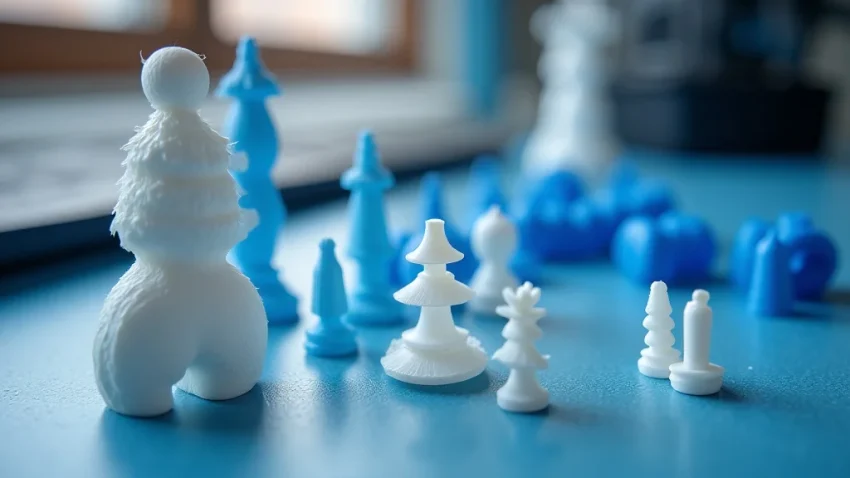
Remember building with LEGOs as a kid? Imagine that, but instead of plastic bricks, you’re creating intricate objects layer by layer, in real life! That’s the essence of a 3D printer in action. This post will explore how these amazing machines work, the incredible things they can make, and the many ways they’re changing the way we make things. You’ll gain a solid grasp of 3D printing, from the basic principles to its practical applications. Prepare to discover the possibilities and see how this technology is shaping the future of design and manufacturing, increasing your knowledge and curiosity about this innovative technology.
Key Takeaways
- Discover the fundamental principles of how 3D printers bring digital designs to life.
- Explore a wide range of materials used in 3D printing and their specific applications.
- Learn about the diverse applications of 3D printing across industries like healthcare, and manufacturing.
- Understand the various types of 3D printers, each with unique advantages.
- Examine real-world examples that demonstrate the impact of 3D printing.
- Gain insights into the future possibilities and ongoing advancements in 3D printing technology.
Bringing Designs to Life: The Basics of 3D Printing
At its core, 3D printing, also known as additive manufacturing, is a process of creating three-dimensional objects from a digital design. Imagine sculpting with invisible layers of material. That’s essentially what a 3D printer does. It starts with a digital model, slices it into thin layers, and then builds the object layer by layer, according to the provided instructions. This method allows for complex geometries and designs that traditional manufacturing methods may struggle to produce. The technology is rapidly changing manufacturing, offering designers, engineers, and hobbyists the ability to create nearly anything they can imagine.
From Digital Design to Physical Object
The process begins with a digital model, usually created using CAD (Computer-Aided Design) software. This software allows users to design objects in 3D, defining their shape, size, and other physical properties. Once the design is complete, it’s converted into a format (typically an STL file) that the 3D printer can read. The STL file essentially breaks down the 3D model into a series of thin, horizontal slices. The printer then uses this information to build the object, layer by layer.
- CAD Software: This is where the magic begins. CAD software provides the tools to design any object imaginable. It’s like having a digital sculptor’s studio at your fingertips. From simple shapes to complex mechanisms, CAD software lets you visualize and prepare your designs. Common programs include Tinkercad (user-friendly for beginners), Fusion 360 (powerful, with a free personal license), and Blender (open-source and excellent for artistic modeling).
- STL File: The STL (stereolithography) file is the universal language of 3D printing. This file format contains the surface geometry of the 3D model, broken down into a series of interconnected triangles. It essentially represents the outer shell of the object. Think of it as a detailed blueprint for the 3D printer, telling it exactly how to build each layer.
- Slicing: Slicing software is the translator between the STL file and the 3D printer. This software breaks down the STL file into horizontal layers and generates the specific instructions that the 3D printer will follow. It determines factors like layer thickness, infill density (how solid the object will be), and support structures (if needed). The output is a G-code file, which the printer uses to control its movements and settings.
Each software offers different features. The choice of software often depends on the complexity of the design and the user’s experience level.
Once exported from CAD, the file gets ready for the printer.
Slicing is a key step, impacting print quality and time.
The Printing Process: Layer by Layer
The printing process itself can vary based on the 3D printing technology, but the basic principle remains the same. The printer’s nozzle or print head moves along a specified path, depositing the material in each layer. As each layer is completed, the build platform (the surface where the object is printed) either moves down or the print head moves up, allowing the next layer to be deposited. This process repeats until the entire object is built. After printing, the object might need some finishing touches like removing support structures or sanding. Then, the newly printed item is ready.
- Material Deposition: The process involves depositing materials, such as plastics, metals, or composites, layer by layer to construct the 3D model. Various methods like fused deposition modeling (FDM), stereolithography (SLA), and selective laser sintering (SLS) are employed, depending on the desired material and application.
- Nozzle Movement: The nozzle moves across the build platform, depositing the material along the programmed path. The printer’s software controls the position of the nozzle and the flow of material, ensuring that each layer adheres properly to the previous one, and that the object is built with accuracy.
The precision in nozzle movement significantly affects the final product.
- Layer Adhesion: The process depends on layer adhesion, where each layer of material fuses with the one below it. This can be achieved through heat (in FDM), light (in SLA), or fusion (in SLS), depending on the specific 3D printing technology used. Good layer adhesion ensures the structural integrity and durability of the 3D-printed object.
Successful adhesion results in strong, functional parts.
Each method offers different levels of detail.
Materials in Action: Exploring 3D Printing Materials
The range of materials that can be used in 3D printing is continuously expanding, offering flexibility. This means that 3D printers can produce objects for various purposes. Choosing the right material depends on the application, desired properties, and the type of 3D printer being used. The options range from common plastics to advanced metals, each offering different characteristics like strength, flexibility, heat resistance, and cost. Understanding these material properties is crucial for selecting the best material for each project, impacting both the functionality and aesthetics of the printed object.
Plastics: Versatile and Widely Used
Plastics are among the most popular 3D printing materials because they are versatile, inexpensive, and easy to work with. They are ideal for prototyping, creating models, and producing a wide range of consumer products. Common plastic options include PLA (Polylactic Acid), ABS (Acrylonitrile Butadiene Styrene), and PETG (Polyethylene Terephthalate Glycol). Each plastic offers different properties and is suitable for various applications. For example, PLA is biodegradable and often used for beginner projects, while ABS is stronger and more heat-resistant.
- PLA (Polylactic Acid): PLA is a biodegradable plastic made from renewable resources like corn starch. It’s easy to print with, low odor, and produces good-looking prints. PLA is a favorite for beginners and is often used for prototypes, decorative items, and educational models.
- ABS (Acrylonitrile Butadiene Styrene): ABS is a tougher, more durable plastic than PLA, making it suitable for functional parts that need to withstand more stress. It is known for its high impact resistance and temperature resistance. ABS is often used for automotive parts, electronic housings, and other products that need to be strong and resilient.
- PETG (Polyethylene Terephthalate Glycol): PETG combines the best properties of PLA and ABS, offering ease of printing, strength, and chemical resistance. It’s often used for parts that need to be durable and functional, like tools, protective cases, and food containers (food-safe grade).
Its biodegradability is a plus for the planet.
ABS is great for items with impact and temperature resistance.
PETG is a flexible option, with a range of uses.
Metals: Strength and Durability
Metal 3D printing allows the creation of strong, durable parts with complex geometries. It is frequently employed in industries like aerospace, automotive, and medical where high-performance parts are essential. Common metal options include titanium, stainless steel, and aluminum. These materials are processed using technologies like Selective Laser Melting (SLM) and Direct Metal Laser Sintering (DMLS), where lasers fuse metal powder together layer by layer. Metal 3D printing is excellent for end-use parts.
- Titanium: Titanium is valued for its high strength-to-weight ratio and corrosion resistance. It is often used in aerospace applications, medical implants, and high-performance automotive components. Its biocompatibility makes it suitable for medical use, such as implants.
- Stainless Steel: Stainless steel provides strength and corrosion resistance at a lower cost than titanium. It is often used in the manufacturing of tools, kitchen equipment, and various industrial parts. The corrosion resistance makes it a suitable material for environments.
- Aluminum: Aluminum is a lightweight metal that offers a good balance of strength and flexibility, and is often used in the automotive and aerospace industries. It is commonly used for manufacturing complex parts and prototypes. Its lightweight property is a major benefit in these fields.
Its strength is a key advantage.
Stainless steel also offers corrosion resistance.
Aluminum is another example of a strong metal.
Other Materials: Composites and Beyond
Beyond plastics and metals, 3D printing also uses composite materials and other specialized substances. These materials broaden the potential applications of 3D printing, enabling the production of items with specific properties. Composites, for example, combine the strengths of different materials to produce parts with enhanced performance. Specialized materials, such as ceramics and carbon fiber-reinforced polymers, are employed in specific applications. These advanced materials show the potential of the technology.
- Composites: Composite materials combine multiple materials to achieve improved performance. Carbon fiber-reinforced polymers are lightweight but very strong, ideal for high-performance components. They are often used in aerospace and sports equipment.
- Ceramics: Ceramic materials offer high-temperature resistance and wear resistance. They are useful in applications like dental implants, engine components, and thermal protection systems. Ceramic printing is developing, expanding design options.
- Specialty Materials: These include materials for specialized applications. For instance, bio-inks are used in bioprinting to create tissues and organs, opening new avenues in medicine. Flexible materials like TPU (Thermoplastic Polyurethane) can be used to create flexible and rubber-like parts.
Composites combine the best of both.
Ceramics are ideal in high-heat areas.
Specialty materials offer diverse functions.
3D Printer in Action: Applications Across Industries
The applications of 3D printer in action are vast, revolutionizing industries and opening new opportunities for innovation. From healthcare to manufacturing, 3D printing is changing the way we design, manufacture, and interact with the world around us. Its ability to create complex geometries, customized products, and rapid prototypes has led to faster development cycles, reduced costs, and the ability to tailor products to meet specific user needs. This section will explore the diverse ways 3D printing is transforming different sectors.
Healthcare: Revolutionizing Medical Advancements
In healthcare, 3D printing is a game changer, enhancing patient care and medical procedures. It allows for personalized medical devices, prosthetics, and surgical models. By creating models of patients’ organs or bones, surgeons can prepare and develop their operations, leading to enhanced accuracy and reducing risks. 3D printing is also used to produce custom implants, dental devices, and hearing aids, providing tailored solutions to meet specific patient requirements. Furthermore, bioprinting, a type of 3D printing, is used to create tissues and organs, opening the door to new frontiers in regenerative medicine.
- Prosthetics and Orthotics: 3D printing allows the creation of customized prosthetics and orthotics that fit the patient precisely and offer better comfort and functionality. This results in devices that improve the user’s mobility and standard of life. 3D printing is capable of producing lightweight and durable products at a fraction of the cost of traditional manufacturing techniques, creating accessibility.
- Surgical Planning and Models: Surgeons are using 3D-printed models of patient-specific anatomy to plan surgeries. This improves the understanding of the patient’s condition, allowing for greater accuracy and reduced risks during operations. These models make it easier for surgeons to practice complex procedures and develop custom surgical instruments.
- Dental Applications: The dental field benefits from 3D printing with the creation of aligners, crowns, bridges, and other dental appliances. This streamlines processes, reduces waiting times, and improves the precision of dental restorations. Digital design and 3D printing can create custom products, resulting in superior fit and aesthetics for patients.
3D printing allows for personalization.
Models are ideal for practice.
Dentists are also benefiting.
Manufacturing: Streamlining Production Processes
Manufacturing uses 3D printing for prototyping, creating tools and jigs, and producing end-use parts. This enhances the speed and efficiency of product development and streamlines production processes. 3D printing can generate complex geometries and customize parts at a low cost. Manufacturers can produce items on demand, reducing the need for large inventories. This technology helps to optimize designs, and manufacturing practices, leading to greater efficiency and flexibility. Small-batch and customized production runs are becoming easier and more economical.
- Rapid Prototyping: Manufacturers create prototypes quickly and cost-effectively, allowing for iterations and refinements in a short time. This speeds up the development process, reducing time to market for products. Designers and engineers use 3D printing to test and validate designs before committing to mass production, lowering the risk of expensive errors.
- Tooling and Jigs: 3D printers can produce custom tools, jigs, and fixtures used on the production line, improving efficiency and accuracy. This reduces the cost of creating these items and the lead times involved in the manufacturing process. These tools are tailored to specific needs, optimizing the manufacturing process.
- End-Use Parts: 3D printing is used to produce end-use parts, especially where customization or low-volume production is required. This may include items, such as complex components for aerospace or automotive parts. The technology helps to create parts with improved functionality, reduce material waste, and optimize supply chains.
Rapid prototyping is a great asset.
Tooling and jigs boost efficiency.
End-use parts expand the scope.
Other Industries: The Expanding Reach
The reach of 3D printer in action extends beyond the health and manufacturing sectors, impacting a multitude of other industries. In the consumer goods industry, 3D printing is used for personalized products and unique designs. In aerospace, it produces lightweight components and complex geometries. The technology is also applied in architecture for creating models and prototypes, in education for instructional purposes, and in art and design for creating sculptures. The ability to create complex and customized items is opening many possibilities. 3D printing is showing its influence across multiple fields.
- Aerospace: 3D printing is used to produce lightweight, high-performance parts for aircraft and spacecraft, such as engine components and interior designs. This reduces the weight of aircraft, increasing fuel efficiency and reducing costs. Also, engineers and designers can develop and test components quickly, which streamlines the development cycle and leads to more innovative products.
- Architecture: Architects can produce models and prototypes of building designs. 3D printing helps visualize concepts, explore design options, and communicate ideas. It enables designers to create intricate models quickly and accurately, allowing stakeholders to evaluate designs easily. Also, 3D printing offers options in creating structural components and customized architectural elements.
- Consumer Goods: 3D printing is used to create products like custom phone cases, jewelry, and personalized items. It allows for the production of unique designs and small-batch manufacturing, providing more variety. The ability to tailor products to individual preferences and create customized items with a high degree of personalization is a major advantage.
Aerospace is a key industry.
Architecture can also benefit.
Consumer goods continue to grow.
Types of 3D Printers: A Range of Technologies
Different 3D printing technologies exist, each offering its own features. The selection depends on the application, desired material, and level of detail needed. Some common types include Fused Deposition Modeling (FDM), Stereolithography (SLA), and Selective Laser Sintering (SLS). Understanding the characteristics of each technology is key to choosing the right printer for any project. You might consider the material limitations, the build volume, and the resolution capabilities when deciding which printer meets your requirements.
Fused Deposition Modeling (FDM)
FDM is one of the most widely used 3D printing technologies, especially among hobbyists and in education. It is an accessible method that involves melting a thermoplastic filament and depositing it layer by layer to create an object. FDM printers are often affordable, user-friendly, and perfect for basic prototyping and educational uses. The simplicity of the technique has made FDM a common choice for beginners. Its ease of operation, low cost, and ability to use a wide variety of materials make it a great option.
- How it Works: A heated nozzle extrudes the plastic filament onto the build platform, following the paths defined by the design. As the plastic cools, it solidifies, forming each layer of the object. The nozzle moves in three dimensions (X, Y, and Z) to build the desired shape.
- Pros: FDM printers are usually affordable, easy to use, and require minimal upkeep. They can work with a wide range of materials, including PLA, ABS, and PETG. FDM printers are also great for beginners due to their user-friendly design.
- Cons: The resolution and surface finish may not be as high as with other technologies. Support structures are often required, and the layer lines can be visible. Limitations in material properties may apply to certain applications.
The heating element is a critical element.
It’s easy to access.
The resolution can sometimes be a challenge.
Stereolithography (SLA)
SLA is a 3D printing process that uses a laser to cure liquid resin. It produces parts with fine details and smooth finishes, and is often used in applications requiring high precision and visual quality. The SLA technology is a great option for prototyping, jewelry-making, and dental applications. Although SLA printers can be pricier than FDM, the detail makes them a popular selection.
- How it Works: A laser beam scans across the surface of a vat of liquid resin, solidifying the resin layer by layer. The build platform moves upwards after each layer is cured, allowing the next layer of resin to be exposed to the laser.
- Pros: SLA printers offer high resolution and produce parts with smooth surfaces and fine details. They are ideal for applications where aesthetics and accuracy are important. SLA printers can create complex geometries, and materials can be optimized to meet specific needs.
- Cons: The resin can be costly and requires proper handling. Support structures are required. The cleaning of finished parts is sometimes necessary, and the build volume might be limited.
The laser is an important piece.
SLA is a fantastic choice.
SLA is also very capable.
Selective Laser Sintering (SLS)
SLS is a 3D printing technology that uses a laser to fuse powdered materials, typically nylon, to create objects. This method is great for producing strong, functional parts and is often employed in manufacturing. SLS printers can create parts with complex geometries. The technology is ideal for producing end-use parts, small batches, and prototypes. It is known for its ability to handle multiple materials.
- How it Works: A laser fuses the powdered material layer by layer, solidifying it into the desired shape. The build platform is gradually lowered, and a new layer of powder is spread over the previous layer. This process continues until the object is complete.
- Pros: SLS produces strong, durable parts and can use a wide range of materials. It doesn’t need support structures, which enables complex designs. SLS can be great for end-use parts and small-batch production.
- Cons: The equipment can be expensive. Material handling can be complex. The surface finish is rougher compared to SLA, but the functionality remains high.
Powdered materials are involved.
SLS is a good option.
SLS provides advantages.
Common Myths Debunked
Myth 1: 3D printing is only for experts.
Reality: While 3D printing can involve complex processes, many 3D printers are user-friendly, especially FDM models. Software like Tinkercad is easy to learn, and there are countless tutorials and communities available to support beginners. Many modern 3D printers are designed for ease of use, with features like auto-leveling and pre-set profiles for materials, making the technology accessible to novices.
Myth 2: 3D-printed objects are always weak and fragile.
Reality: The strength of a 3D-printed object depends on the material used, the printing settings, and the design. Some materials, such as ABS and certain composites, produce strong and durable parts. With proper design and appropriate material selection, 3D-printed objects can be incredibly strong and suitable for functional applications. Furthermore, the use of infill patterns allows to adjust the object’s strength.
Myth 3: 3D printing is always slow and inefficient.
Reality: While some 3D printing processes can take a while, especially for large or complex objects, the speed of 3D printing has improved over time. Faster printers are available, and the technology is rapidly developing to be more efficient. The production time depends on factors such as printer type, object size, material, and printing settings. For rapid prototyping and custom parts, 3D printing can be faster and more efficient than traditional methods.
Myth 4: 3D printing is expensive.
Reality: The cost of 3D printing can range greatly, depending on the printer, materials, and complexity of the object. While the initial investment in a 3D printer can seem high, the cost of materials and the ability to produce on demand often make 3D printing cost-effective. For small production runs or custom parts, 3D printing can be cheaper than traditional manufacturing techniques. Also, the cost of printers has decreased, making the technology more affordable.
Myth 5: 3D printing can only create plastic objects.
Reality: While plastic is a commonly used 3D printing material, 3D printers can also use metals, ceramics, composites, and other materials. Different 3D printing technologies are designed to work with various materials, expanding the possibilities for creating objects. The range of materials is growing, enabling 3D printing to be used across multiple industries.
Frequently Asked Questions
Question: What is the most common 3D printing technology for beginners?
Answer: Fused Deposition Modeling (FDM) is the most common technology for beginners because it’s usually more affordable and easier to learn.
Question: What are STL files, and why are they important?
Answer: STL files are the standard format for 3D printing, representing the surface geometry of a 3D model, essential for the printer’s operations.
Question: Can 3D-printed objects be food-safe?
Answer: It depends on the material. Some plastics, like PETG, can be food-safe if printed correctly and with the right settings and equipment. It is important to check the material certifications.
Question: What is the difference between prototyping and end-use parts in 3D printing?
Answer: Prototyping uses 3D printing to create models for testing and design validation, while end-use parts are final products for direct use.
Question: What are some of the limitations of 3D printing?
Answer: Limitations include build volume restrictions, material properties, and the sometimes slower production speed compared to mass production methods.
Final Thoughts
The journey of 3D printer in action has just begun! From building custom prosthetics to revolutionizing manufacturing processes, this technology is already making an impact. We’ve explored the core mechanics of 3D printing, the materials powering its capabilities, and the diverse applications transforming various fields. You’ve also gained insights into the different types of 3D printers, dispelling common myths, and addressing common queries. Now it is clear that 3D printing offers a way to bring designs to life, accelerating innovation and enabling customized solutions. You can start with basic projects and get to more complicated ones as you learn. Explore the diverse landscape of 3D printing. The future is exciting, so embrace it!